Alif Jakir
Omnidisciplinary inventorcomputer scientist · philosopher–scientist–futurist
1/3
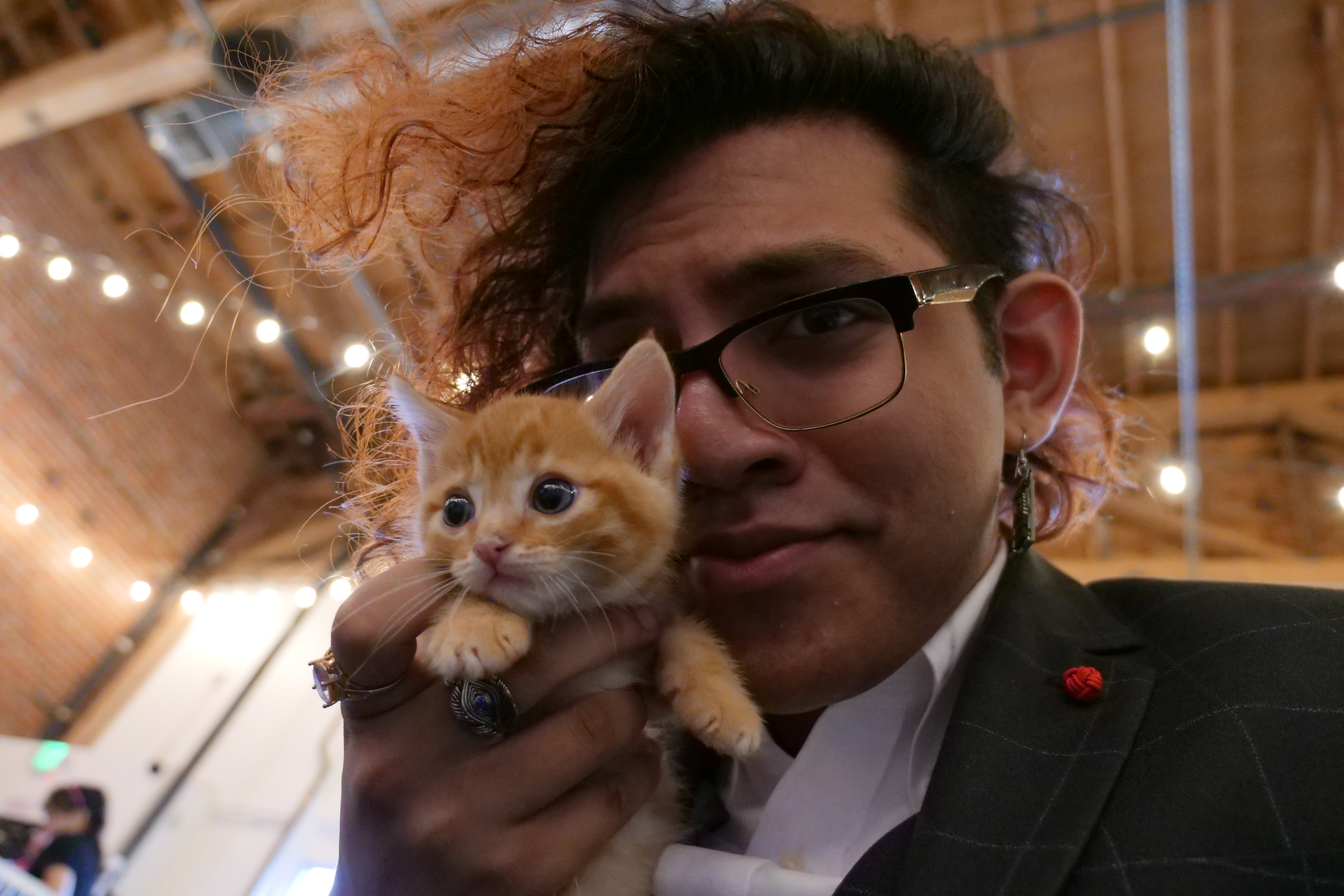
Hello. I'm Alif :3. أ, א, الیف, 阿利夫, আলিফ, Алиф, アリフ, 알리프. Walk with me~
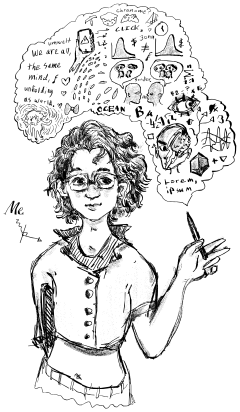
I'm from New York, I grew up between Bangladesh and the US, and I live in Massachusetts now. The question I keep coming back to is how the matter in the Universe organized itself, from gas to stars to cells to minds to the group of minds reading and writing this page, and what it organizes into next. I can't do much about the stars. The last step I can work on with my hands: how many minds, some of them now machines, think together when none of them can hold the whole picture. I'm here for the silly and the absurd, the cosmic, a good poem, a good equation, and people most of all. Maybe you, reading this, will change my life.
I'm from New York, I grew up between Bangladesh and the US, and I live in Massachusetts now. The question I keep coming back to is how the matter in the Universe organized itself, from gas to stars to cells to minds to the group of minds reading and writing this page, and what it organizes into next. I can't do much about the stars. The last step I can work on with my hands: how many minds, some of them now machines, think together when none of them can hold the whole picture. I'm here for the silly and the absurd, the cosmic, a good poem, a good equation, and people most of all. Maybe you, reading this, will change my life.
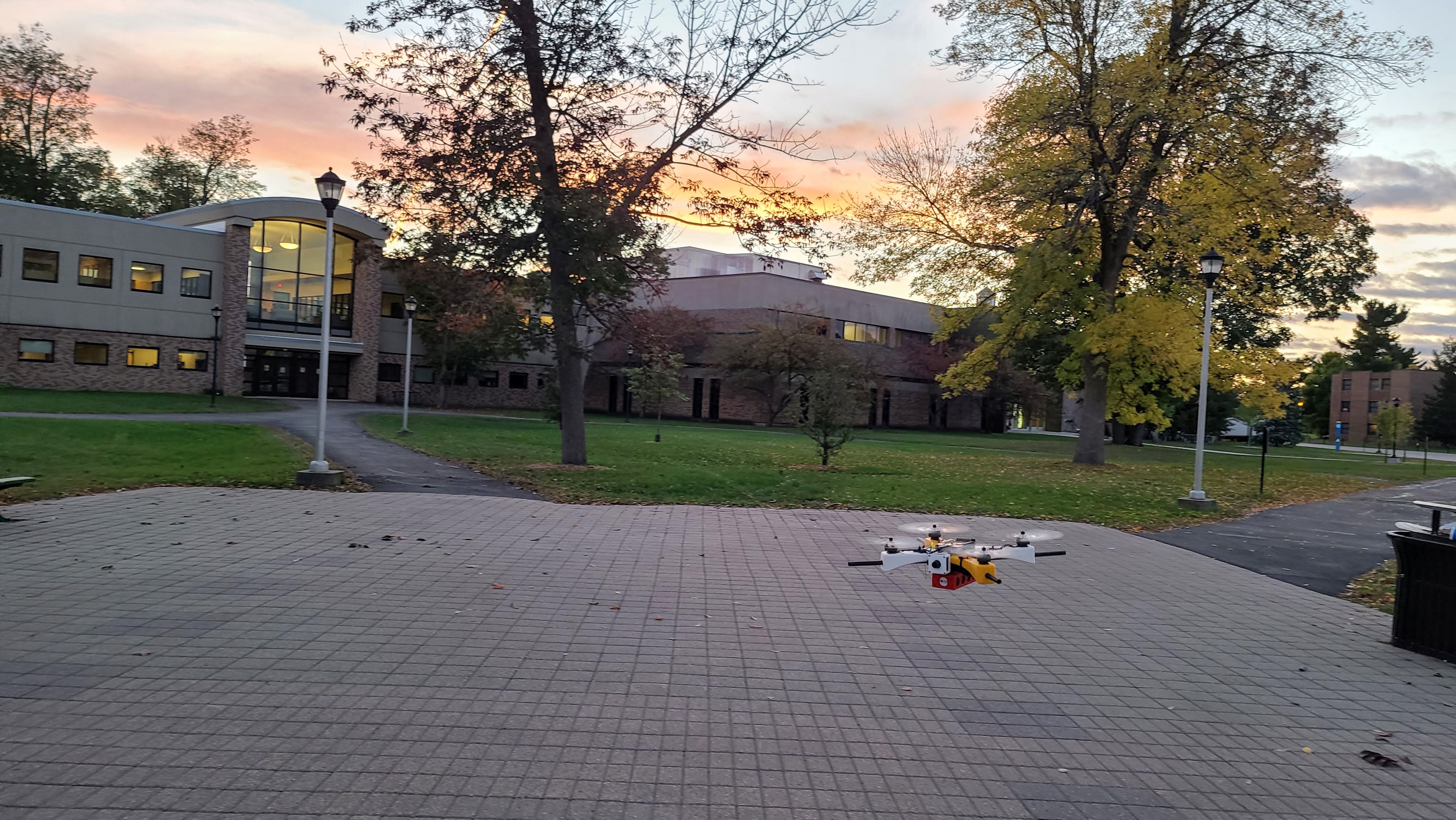
Since September 2025 I have run Superintelligent Group (ΣIG), which grew out of Halcyox, the R&D company I started in college. I build aug.dev (an augmented development stack for builders), and I am an independent affiliate researcher at the MIT Media Lab in the Fluid Interfaces group. My research sits in extended reality, brain-computer interfaces, immersive and massively multiplayer worlds, and new paradigms for open source, with the full list on the research page. Before that I was the first non-founding engineer at FabuBlox, an MIT nanotech spinout, and before that I flew drones from VR in Clarkson's TARS Lab and spent a summer in a DTU cleanroom. I like work where being wrong costs something, because that is where you find out what you actually understood.
The idea I keep testing, in every field I touch, is that intelligence is not in the parts. A neuron on its own means nothing; in the model I work in, a few thousand firing together are a word. One person on a hard problem is slow; a room of people who disagree well can beat its best member, and we can measure when it does. An agent on its own is a sentence generator; a hundred of them arranged badly are a very expensive way to produce nothing, which I have watched happen. Whether a hundred arranged well can become something none of them could be alone is the question I built a company to answer. I think that is one question asked at different scales, and it is why one person ends up working on neural assemblies, on agent swarms, on the politics of who gets to decide, and on matter that can rearrange itself. Same question, different material. Taken far enough back it is the question in the first paragraph: how matter comes to hold a pattern that outlasts any of its parts, and whether that pattern can come to know what it is doing.
What I believe about the next few years follows from that. I do not expect the superintelligence that matters to be a mind in a box. I expect an arrangement of people and machines, exactly as good as the arrangement, which leaves two questions worth my time: what the arrangement should be, which I call supercoordination, and whether the people inside it can still change it. I want that arrangement to be something anyone can join, as ordinary as a public library, because the point of all of this is to expand what people can do, all of us, and a superintelligence that only a few can use would be the opposite of that. The argument for the arrangement is written up as a theory, with the machinery in a companion. I am building it at ΣIG, which current work covers, and testing it in the open on AI Civilizations, where the failures are the interesting part.
The idea I keep testing, in every field I touch, is that intelligence is not in the parts. A neuron on its own means nothing; in the model I work in, a few thousand firing together are a word. One person on a hard problem is slow; a room of people who disagree well can beat its best member, and we can measure when it does. An agent on its own is a sentence generator; a hundred of them arranged badly are a very expensive way to produce nothing, which I have watched happen. Whether a hundred arranged well can become something none of them could be alone is the question I built a company to answer. I think that is one question asked at different scales, and it is why one person ends up working on neural assemblies, on agent swarms, on the politics of who gets to decide, and on matter that can rearrange itself. Same question, different material. Taken far enough back it is the question in the first paragraph: how matter comes to hold a pattern that outlasts any of its parts, and whether that pattern can come to know what it is doing.
What I believe about the next few years follows from that. I do not expect the superintelligence that matters to be a mind in a box. I expect an arrangement of people and machines, exactly as good as the arrangement, which leaves two questions worth my time: what the arrangement should be, which I call supercoordination, and whether the people inside it can still change it. I want that arrangement to be something anyone can join, as ordinary as a public library, because the point of all of this is to expand what people can do, all of us, and a superintelligence that only a few can use would be the opposite of that. The argument for the arrangement is written up as a theory, with the machinery in a companion. I am building it at ΣIG, which current work covers, and testing it in the open on AI Civilizations, where the failures are the interesting part.
This site is my lab notebook, kept in the open. It is where I think before I am sure. If something here made you want to build, or to argue, write to me.
About me:
Affiliations:

MIT Media LabSep 2022–Present
Technical University of Denmark (DTU)Jun 2023–Jul 2023
Prev: First hire at FabuBlox (MIT Media Lab nanotech spinout). Software Engineer, Nov 2024–Aug 2025.

Recently:
building a superintelligent human machine team platform @ superintelligent.group


Thinking: Whether "understanding" in LLMs is the thing or a convincing shadow, and what symbiosis looks like when neither side pretends the other is optional..
Listening:
Writing:
Get in touch · Research & papers
3years:03months:27days:23hours:54minutes:50seconds
predictions until 2030 (page coming soon...)